Varicose Vein Treatment
Updated: Jun 17
Veins in the legs are responsible for carrying blood back to the heart, working against gravity, particularly when standing. To support this process, the body relies on a series of mechanisms, including the foot pump, calf muscle pump, and thigh muscle contractions, which help push blood upwards through the deep veins.
Within these veins are one-way valves that prevent blood from flowing backwards. When these valves become weakened or fail to function properly, blood can flow in the wrong direction (a process known as venous reflux). This causes blood to pool in the superficial veins, leading to increased pressure and vein enlargement.
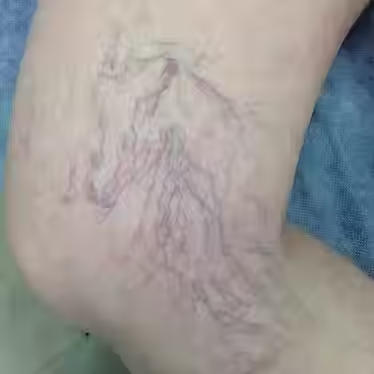
These enlarged, twisted veins are known as varicose veins. They may appear visibly under the skin or, in some cases, remain hidden but still cause symptoms.
The severity and extent of varicose veins are best assessed by a venous ultrasound scan, which provides a detailed evaluation of blood flow and valve function.
If left untreated, poor circulation and stagnant blood flow can lead to a range of complications, including:
Skin irritation or eczema
Discolouration of the skin
Hardening or thickening of the skin
Venous leg ulcers
Early assessment and appropriate management can help prevent progression and improve both symptoms and long-term outcomes.

Symptoms of Varicose Veins
Varicose veins can present with a range of symptoms, which often worsen after prolonged standing or towards the end of the day. Common symptoms include:
Aching or discomfort in the legs
Itching around the affected veins
Throbbing sensations
A feeling of heaviness or fatigue in the legs
Restless legs, particularly at night
Muscle cramps
Swelling in the lower legs and ankles
Causes of Varicose Veins
Venous disease is a common condition that can affect both men and women at any age. Several factors can increase the likelihood of developing varicose veins:
Family history: A genetic predisposition can weaken vein walls and valves over time
Previous Deep Vein Thrombosis (DVT): Damage to the vein valves increases the risk of venous insufficiency
Pregnancy: Hormonal changes and increased pressure from the uterus can impair blood flow from the legs
Obesity: Excess weight places additional pressure on the venous system
Prolonged standing or sitting: Reduced circulation can contribute to blood pooling in the legs
Previous injury: Bone fractures or soft tissue trauma may affect normal venous function
Diagnosis
Following a detailed clinical history and physical examination, a colour flow duplex ultrasound is the gold standard investigation for diagnosing varicose veins.
This non-invasive scan allows for precise assessment of blood flow, valve function, and identification of any underlying venous reflux, helping to guide the most appropriate treatment plan.
Treatment Options
There are several effective treatment options available for varicose veins. As these veins do not play a vital role in circulation, they can be safely treated or closed, often resulting in improved blood flow and significant symptom relief.
Treatment options include:
Endovenous Laser Therapy (EVLT)
Ultrasound-Guided Sclerotherapy (UGS)
Conservative Management, including compression therapy and lifestyle modifications
Your treatment plan will be tailored to your individual condition, symptoms, and overall health.
It is important to note that varicose veins can be a progressive condition. New veins may develop over time, and some patients may require ongoing or maintenance treatment.
A follow-up appointment is arranged to assess treatment success. Any remaining veins can be treated in the clinic using ultrasound-guided sclerotherapy. Occasionally, a small trapped blood clot (superficial thrombus) may develop in a treated vein and can be easily removed by aspiration in the clinic if needed.