Carotid Artery Stenosis
What Is Carotid Artery Stenosis?
Causes, Symptoms & Treatment
What Causes Carotid Artery Stenosis?
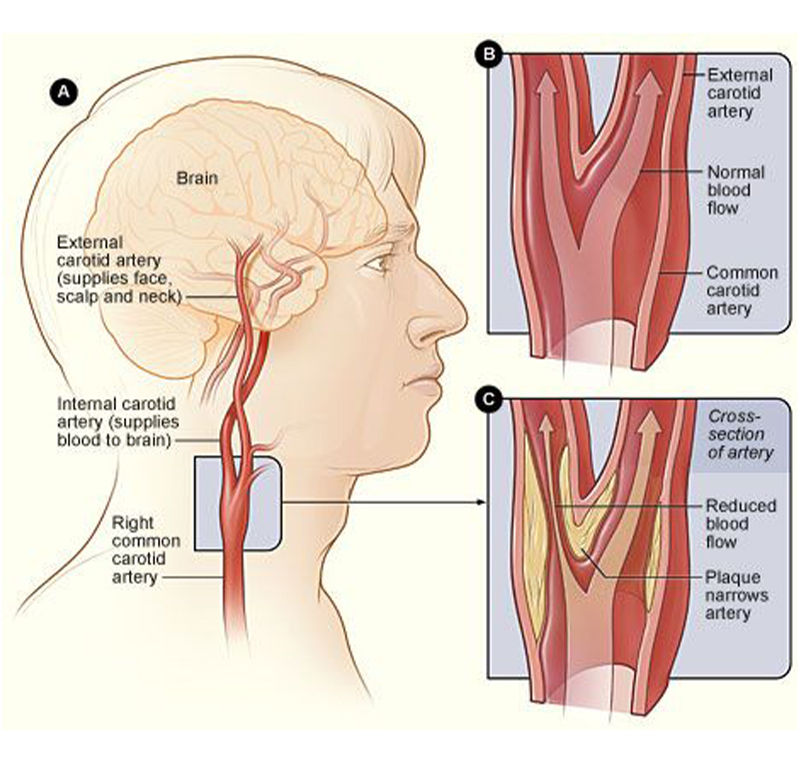
Carotid artery stenosis is primarily caused by atherosclerosis, a process in which fatty deposits (plaque) build up within the artery walls, leading to narrowing and reduced blood flow to the brain.
Key risk factors include:
Smoking
High blood pressure (hypertension)
High cholesterol levels
Diabetes
Advancing age
Family history of cardiovascular disease
Symptoms
Carotid artery stenosis often develops gradually and may not cause symptoms in its early stages.
In some cases, it may present as a Transient Ischaemic Attack (TIA) or “mini-stroke”, which is a warning sign of increased stroke risk.
Symptoms may include:
Sudden weakness or numbness on one side of the body
Difficulty speaking or understanding speech
Sudden loss of vision in one eye
Dizziness or loss of balance
These symptoms may be temporary, but should always be treated as a medical emergency.
Treatment Options
Treatment depends on the severity of the narrowing and the patient’s overall risk profile. The aim is to reduce the risk of stroke and improve blood flow to the brain.
Carotid Endarterectomy (CEA)
Carotid Endarterectomy (CEA) is a surgical procedure used to remove plaque from the carotid artery and restore normal blood flow.
The carotid arteries are the main vessels supplying blood to the brain, face, and neck, making this procedure highly effective in reducing stroke risk in appropriate patients.
Overview of the CEA Procedure
Before Surgery
Assessment & Planning
Your doctor will carry out a comprehensive evaluation, including your medical history and imaging tests such as:
Carotid ultrasound
CT angiography
MR angiography
Preparation
You may be advised to:
Temporarily stop certain medications
Fast before the procedure
Arrange transport and support following discharge
During Surgery
Anaesthesia: Either general anaesthesia (asleep) or local anaesthesia with sedation
Incision: A small incision is made along the side of the neck
Plaque Removal: The artery is carefully opened, and the plaque is removed
Closure: The artery is repaired
After Surgery
Recovery
Patients typically remain in the hospital for 1–2 days for monitoring.
Medications
You may be prescribed medications such as:
anticoagulation (lixiana) agents (e.g., aspirin)
Blood pressure medications
Cholesterol-lowering therapy
Follow-Up
Regular follow-up appointments are important to:
Monitor healing
Assess blood flow
Reduce the risk of recurrence
Outcomes
Carotid endarterectomy is a well-established procedure with strong evidence in reducing the risk of stroke in patients with significant carotid artery narrowing.