Spider Veins
What Are Spider Veins?
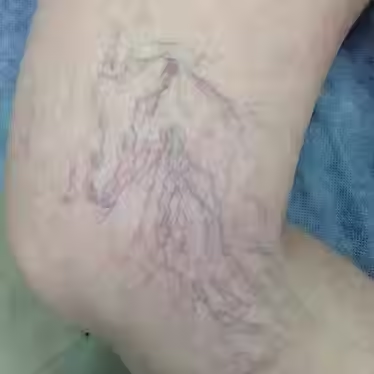
Spider veins, also known as thread veins or telangiectasias, are small, dilated blood vessels that appear close to the surface of the skin. They are typically red, blue, or purple in colour and commonly occur on the legs and face.
They are named for their characteristic web-like or branching appearance, often resembling a spider’s web. Spider veins are generally harmless and do not usually cause medical problems. However, for some individuals, they may be considered cosmetically undesirable. In such cases, a range of safe and effective treatments are available to improve their appearance and restore skin clarity.
What Is Sclerotherapy?
Sclerotherapy is a well-established, minimally invasive procedure used to treat spider veins and smaller varicose veins. These veins can become dilated and visible, most commonly affecting the legs.
The treatment involves the precise injection of a specialised solution, known as a sclerosant, directly into the affected veins. This solution causes the vein walls to collapse and seal shut. Over time, the treated veins are naturally broken down and reabsorbed by the body.
As a result, blood flow is redirected to healthier veins, improving overall circulation while also reducing the visible appearance of unwanted veins.
What to Expect
Sclerotherapy is typically performed in a clinic setting and does not require anaesthesia. The procedure is quick, with minimal discomfort, and patients can usually return to normal activities shortly afterwards. Multiple sessions may be recommended, depending on the number and size of veins being treated, to ensure optimal cosmetic and clinical results.What Are the Steps Involved?
Injection
The procedure is typically performed with the patient lying comfortably. A very fine needle is used to inject the sclerosant solution directly into the targeted vein. This solution irritates the inner lining of the vein, causing it to swell and the walls to stick together.
Compression
Following treatment, compression is applied using a bandage or medical-grade compression stocking. This helps keep the vein walls closed, promoting effective sealing and improving overall treatment outcomes.
Healing Process
In the weeks following treatment, the injected vein undergoes a gradual healing process. The irritation caused by the sclerosant leads to the formation of scar tissue within the vein, which causes it to collapse and seal shut. As the vein closes:
The body naturally breaks down and absorbs the treated vein
Blood flow is redirected to healthier surrounding veins
The appearance of the vein gradually fades
Over time, the vein becomes significantly less visible or disappears entirely. Associated symptoms such as aching, swelling, or discomfort often improve as circulation is restored.
Follow-Up Care
Achieving optimal results may require multiple treatment sessions, depending on the extent and severity of the veins being treated.Follow-up appointments will be arranged to:
Monitor your progress
Assess treatment effectiveness
Determine if any additional sessions are required
Ongoing care ensures the best possible clinical and cosmetic outcomes.